

WakeHereward Project
Safeguarding the Hereward legend since 2013.
Forgotten hero..
Freedom fighter..
Legend..
.png)
HEREWARD COUNTRY
Walk the land. Wake the story.
Hereward Country is a long-term cultural heritage programme that brings together landscape, history, and community to tell the story of Hereward the Wake in the places where it unfolded.
Rooted in the Fenlands and its surrounding counties, Hereward Country connects towns, villages, abbeys, causeways, and countryside through a growing network of trails, interpretation, and heritage markers. It invites people to explore the Hereward legend not through a single attraction, but by moving through the land itself.

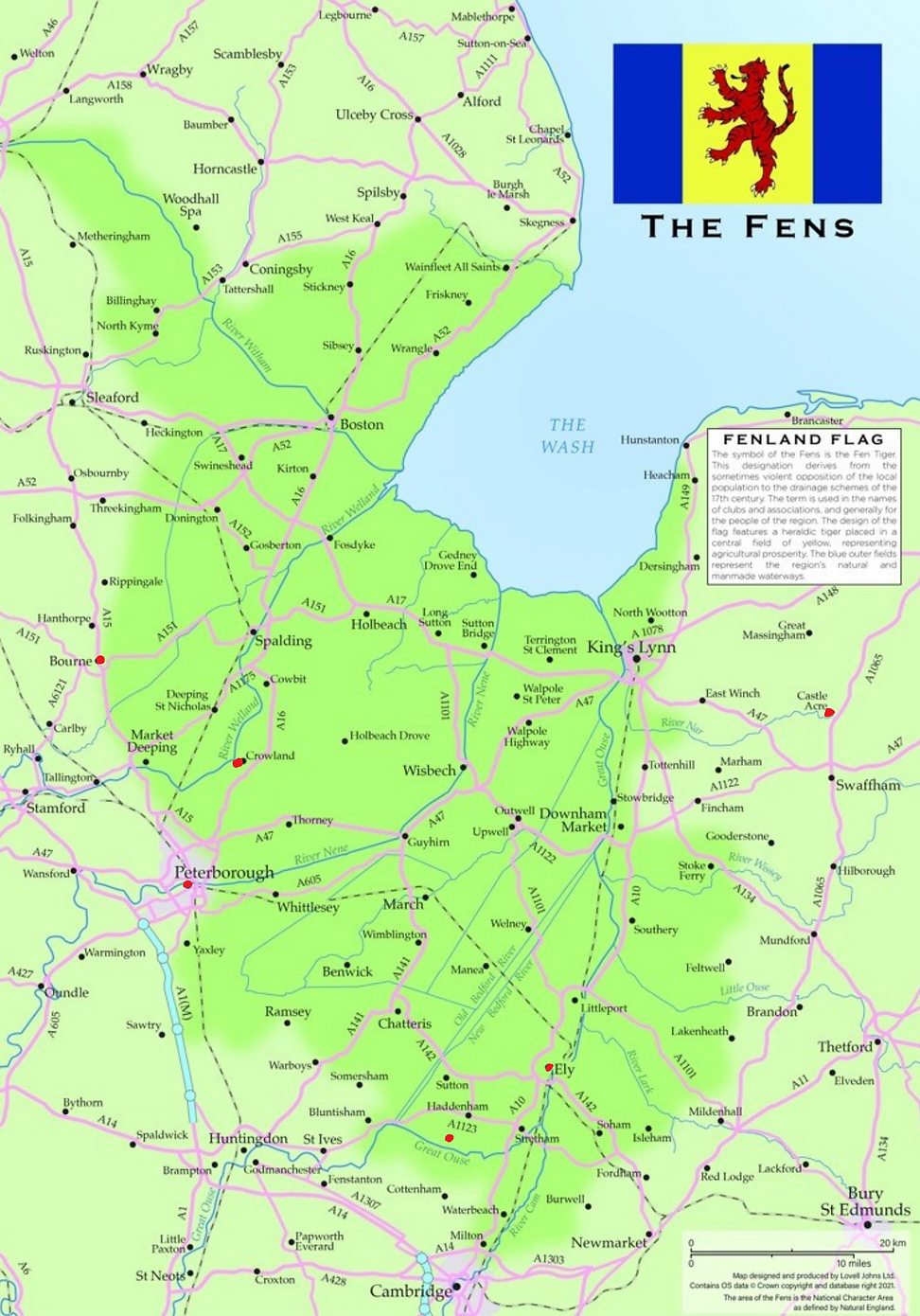
At its heart is the Hereward Trail — the original route linking Bourne, Peterborough, Ely, and Crowland — supported by additional walking, cycling, and driving routes across Hereward Country. Along these routes, the programme aims to develop heritage boards, waymarkers, QR-linked interpretation, and, in time, monuments, placards, and public artworks that anchor the story in place.
Hereward Country is about cultural heritage tourism: encouraging visitors to slow down, explore locally, and discover the rich history of the region while supporting its communities. It is designed to grow through collaboration — forging relationships with parish, town, district, and county councils, heritage bodies, schools, landowners, and local businesses.
The programme sits under the WakeHereward Project, which exists to raise awareness of Hereward the Wake and preserve his legacy for future generations. Hereward Country provides the physical, walkable expression of that mission — turning history into journey, and landscape into narrative.
Whether you arrive for a short walk, a multi-day trail, or a deeper exploration of the Hereward legend, Hereward Country invites you to begin a journey of discovery.
Keep exploring — adventure is out there, waiting!
Take the Hereward Trail across Hereward Country in search of Hereward


BOURNE - PETERBOROUGH - ELY - CROWLAND
In Search of Hereward
A One-Day Journey Along the Hereward Trail
The Hereward Trail is the principal route through Hereward Country — a one-day driving journey that follows the life, legend, and legacy of Hereward the Wake across four historic locations: Bourne, Peterborough, Ely, and Crowland.
Taken in sequence, the trail allows visitors to move through Hereward’s story as it unfolded — from origins and exile, through notoriety and rebellion, to legend and memory.
Morning — Bourne: Origins and Exile
Begin your journey in Bourne, traditionally regarded as Hereward’s homeland. It was here that the young Hereward’s early life unfolded — and from where he was eventually exiled, beginning the long road that would turn a local troublemaker into a national figure.
After years abroad, Hereward returned to Lincolnshire hardened by experience and reputation. According to tradition, it was in the woods around Bourne that he gathered his followers and struck back against Norman authority, culminating in the famous Slaughter of the Normans. Bourne represents the beginning of the story — the making of the man.
Late Morning — Peterborough: Notoriety and Outlawry
From Bourne, travel south to Peterborough, where Hereward’s name entered the written record — and where his reputation darkened.
In the summer of 1068, Hereward was reportedly knighted by Abbot Brand of Peterborough, an act that placed him briefly within the established order. Two years later, on 2 June 1070, he returned at the head of an armed force and ransacked the monastery, carrying off treasure and valuables during one of the most notorious episodes of the post-Conquest period. Some later traditions even claim Hereward was related to the abbot.
Peterborough is where Hereward became infamous — feared by the authorities, admired by supporters, and firmly established as an outlaw.
Midday — Ely: Resistance and Fame
Continue east to Ely, the heart of the Hereward legend.
Hereward’s stand on the Isle of Ely against the forces of William the Conqueror secured his lasting fame. From this marshland stronghold, Hereward and his band defied Norman power, using their knowledge of the Fens to frustrate repeated military campaigns.
Ely represents Hereward at his height — rebel leader, symbol of resistance, and master of the landscape. A visit to Ely Cathedral and the surrounding area offers a powerful sense of the scale and significance of this final stand.
Lunch in Ely allows time to absorb the setting before the journey’s final leg.
Late Afternoon — Crowland: Legend and Memory
The trail concludes back in Lincolnshire at Crowland Abbey.
According to tradition, this is where Hereward was eventually laid to rest, buried alongside his wife Torfrida. Whether legend or truth, Crowland marks the quiet end of a turbulent life. The ruins of the abbey offer a reflective close to the journey — a place of memory rather than conflict.
Here, the story of Hereward passes from history into legend.
A Journey Through Landscape and Story
The Hereward Trail can be completed comfortably in a single day by car, with each stop offering its own atmosphere and perspective. Together, Bourne, Peterborough, Ely, and Crowland form the backbone of Hereward Country — the original route for those wishing to walk, drive, or trace the story of Hereward the Wake.
Take the Hereward Trail across Hereward Country in search of Hereward.
Keep exploring — adventure is out there, waiting!
The Hereward Trail
Destinations and Postcodes for your SatNav
1) Bourne - Baldocks Mill Heritage Centre - PE10 9LY
Bourne - Bourne Woods - PE10 9RR
2) Peterborough - Peterborough Cathedral - PE1 1XS
Aldreth - Aldreth Causeway - CB6 3PQ
3) Ely - Ely Cathedral - CB7 4DL
4) Crowland - Crowland Abbey - PE6 0EN
_edited.jpg)
Hereward Country - home of a legend
Hereward Country refers to the region in eastern England, particularly the Fenlands and Fen Edge areas of South Lincolnshire, West Norfolk and Cambridgeshire, that are closely connected to the Hereward legend. This flat, marshy landscape, now largely drained and cultivated, was once an untamed and inhospitable wilderness of wetlands, rivers, and reed beds. It provided the perfect hideout for Hereward and his band of rebels as they waged guerrilla warfare against William the Conqueror's forces.
Hereward's story is wrapped in both fact and myth, with early chronicles such as the *Gesta Herewardi* detailing his defiance. He was born into a noble family in the region and, according to legend, returned from exile in Europe to find his lands seized by the Normans. Refusing to submit, Hereward led a rebellion centered on the Isle of Ely, one of the few easily defensible areas in the swampy Fens. The region’s geography played a crucial role in his resistance, with the treacherous terrain preventing the Normans from launching a full-scale attack for a considerable time.
Hereward’s exploits resonated deeply with the people of the Fens, as they saw in him a symbol of defiance and independence. Over time, Hereward became a folk hero, his deeds woven into the national memory as a defender of the Anglo-Saxon way of life against the invading Normans. The remoteness of the Fenlands, with its complex network of rivers and marshes, reinforced this sense of autonomy and separateness from the rest of England. The legacy of Hereward’s resistance is still felt in the region today, and his name has been immortalized in local culture, from schools and streets to festivals.
Historically, the Fenlands have always been a place of both isolation and resilience. Before they were drained in the 17th through to the 19th centuries the wetlands supported communities that relied on fishing, fowling, and reed-cutting, maintaining a way of life that had remained largely unchanged for centuries. The draining of the Fens, while opening up vast areas of fertile agricultural land, also transformed the landscape, removing much of the wildness that had once defined the area. However, the region still retains a unique character, shaped by its past and by the stubborn independence of its people.
Today, Hereward Country is a quieter, rural area, known for its wide skies, long horizons, and rich agricultural heritage. It’s a place where history and legend intermingle, where the memory of Hereward the Wake continues to evoke a sense of pride and connection to the land. Locals and visitors alike are reminded of the region’s distinct identity, rooted in its geography and its long history of resistance and survival against external forces
.png)

.png)